Dish drying rack vs tea towel: which to use?
For a couple of mugs a day, a tea towel spread on the counter does the job. For a household's daily dishes, a rack with proper drainage holds more, drips into the sink instead of onto the counter and skips the hand-drying. In a small kitchen, choose by footprint and drainage.
At a glance
| Product | Best for | Price | Warranty |
|---|---|---|---|
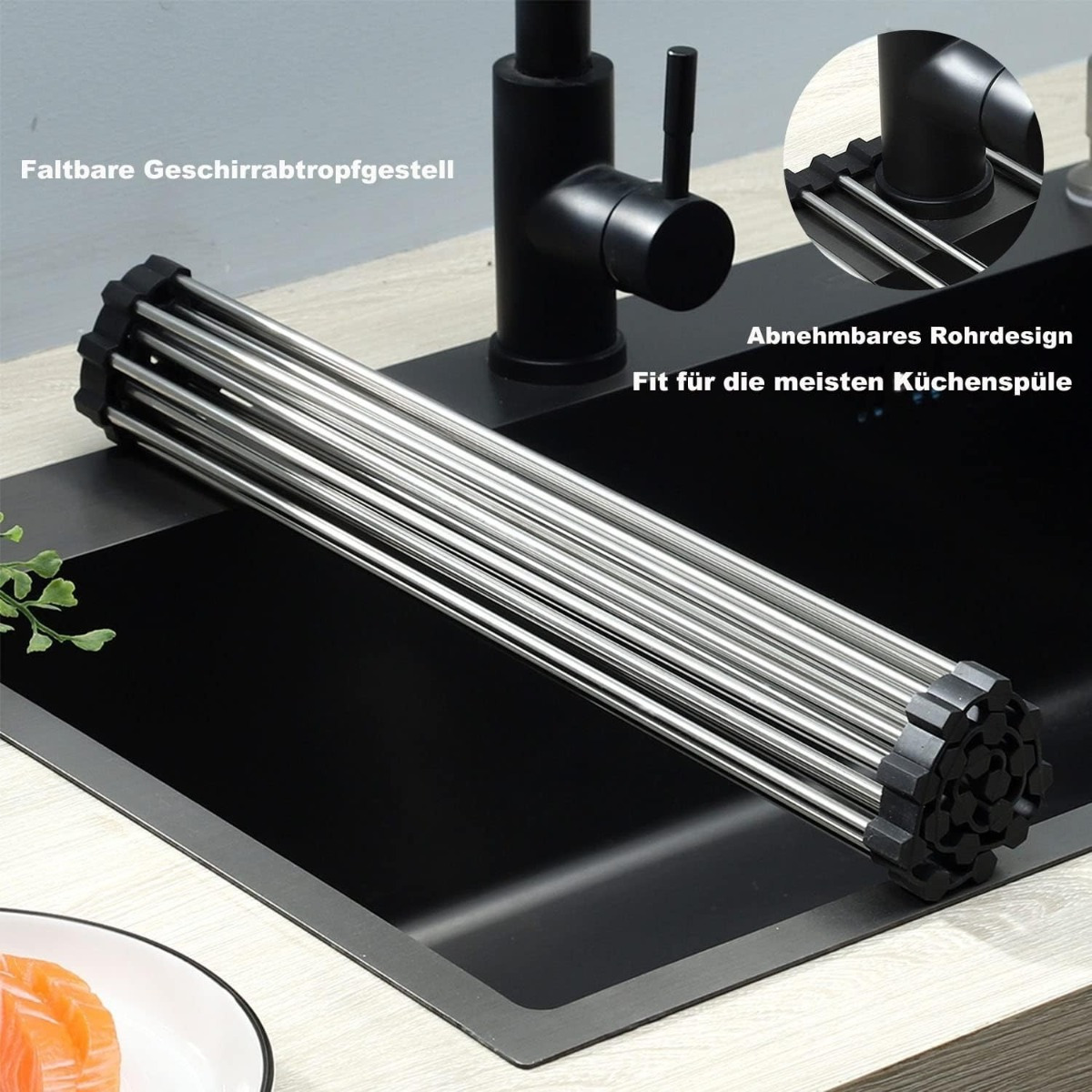
| Stainless Steel Dish Drying Rack | Real supplier stock — ships in 8–15 days | € 23.95 | 2 years |
| 2-Tier Under-Sink Shelf with Hooks | Real supplier stock — ships in 8–15 days | € 35.95 | 2 years |
What each one is good at
The tea towel's strengths are zero footprint and zero cost: spread it, stack a few clean dishes, hang it up afterwards. For a light load, one or two people who mostly run the dishwasher, that can be the whole system. The rack's strengths are capacity and airflow. Plates stand separated, air reaches everything, water drains instead of pooling in fabric, and nobody has to stand there with a drying cloth. From roughly a family's daily wash-up onward, the towel stops being charming and starts being a bottleneck.
The hygiene question
A towel that dries dishes and then lies damp on the counter is doing two jobs badly. Damp fabric holds moisture for hours, picks up smells and needs washing often to stay pleasant. Air-drying on a rack sidesteps that: nothing touches the dishes after the rinse. Racks have their own duty of care. A rack without proper drainage grows a puddle, and a standing puddle is its own small problem. Choose a rack with a real drainboard or spout that sends water to the sink, and rinse the tray whenever you empty the rack.
Counter space, the real price
In a small kitchen the rack's cost is not money, it is the permanent square of counter it occupies. Two habits shrink that cost. First, size the rack to your actual dish load rather than the biggest one sold: a two-person household needs half of what a family does. Second, treat the rack as a transit zone, emptied every morning, never as open-air cupboard number two. A stainless model like the Stainless Steel Dish Drying Rack survives that daily loop without rusting, and its footprint pays rent because it is actually in use.
The combination most kitchens land on
This is not really a versus. Most working kitchens end up with both: a right-sized rack for the daily wash-up, plus a clean towel for overflow days, delicate glassware and the pans that never quite fit. The towel then gets hung to dry properly instead of lying damp. Store the backup towels and the washing-up stock somewhere sensible: the cupboard under the sink, layered with a small shelf, keeps the whole washing-up kit in one place. The counter holds the rack; the cupboard holds everything that supports it.
FAQ
Is it better to air dry dishes or towel dry them?
Air-drying on a rack is the lower-effort, lower-contact option: nothing touches the dishes after rinsing and there is no damp cloth in play. Towel-drying still makes sense for glassware you want spotless and for overflow, with a clean, dry towel.
How big should a dish rack be for a small kitchen?
Match it to the household, not the sink. One or two people are usually served by a compact single-level rack; save the two-tier towers for family-sized wash-ups. A rack you empty every morning can afford to be small.
How often should a tea towel be washed?
Often, and sooner if it stays damp or starts to smell. A towel used on dishes should dry fully between uses, hung up rather than crumpled, and rotate with clean spares through the week.