Are fridge storage bins worth it?
Fridge storage bins are worth it when the problem is visibility: food loaded behind other food, leftovers lost at the back. Clear bins work like pull-out drawers, so everything comes forward in one movement. They are not worth it for a fridge that is simply too full, so purge first.
The problem bins actually solve
A fridge gets chaotic for one structural reason: it is a deep box loaded from the front. Whatever arrives newest stands in front of whatever was already there, and food at the back leaves your memory the moment the door closes. Clear bins change the mechanics. A bin is a drawer you can pull: grab the handle and the back row comes to you. That single movement is why bins work where good intentions fail, and why the improvement survives busy weeks. The fridge stays loaded front to back, but nothing is buried anymore.
Where bins earn their keep
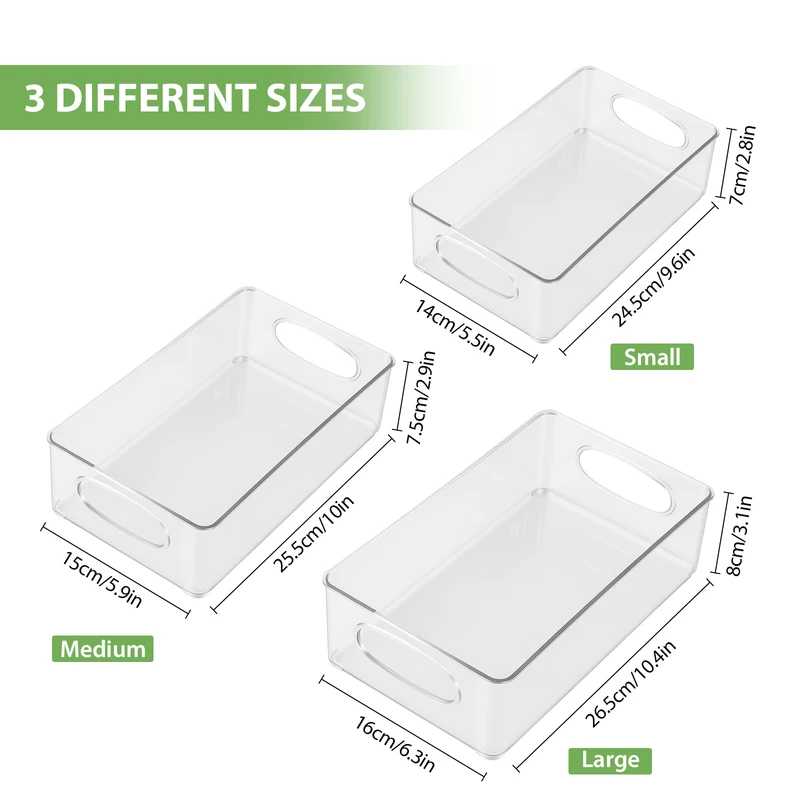
Bins pay off on deep shelves and with small, loose items: jars, snacks, leftovers, cheese. Group by category, one bin each, and give the most valuable shelf position to an eat-me-first bin holding whatever is closest to its date. A set with several sizes, like the Clear Stackable Fridge Bins, lets you match the bin to the category instead of forcing everything into one format. Transparency is non-negotiable: the moment a bin hides its contents, it becomes a smaller version of the problem it was meant to fix.
Where bins waste space, honestly
Bins are not the answer to a fridge that is simply too full. A bin has walls, and walls take millimetres; in a packed fridge those millimetres cost you a jar per shelf. Purge first, then containerise what remains. Skip bins for big, self-evident items too. A melon does not need a bin, and neither do the milk cartons in the door. If a category is large, visible and always in the same place, it is already organised. Bins are for the small and the losable, not for everything.
A starter layout that works
Start with the shelf that annoys you most, not the whole fridge. A common first setup: one bin for dairy, one for the jars and condiments that spread everywhere, one eat-me-first bin at eye level. Load bins with the contents facing out and return them to the same spot every time. Bins also make cleaning less of a project: lift the bin, wipe the shelf, done. That maintenance loop, a shelf wiped in a minute rather than a quarterly deep clean, is a quiet part of why binned fridges stay organised.
FAQ
Do fridge bins help reduce food waste?
They help with the main cause: food forgotten behind other food. Clear bins pull the back row forward in one movement, and an eat-me-first bin at eye level keeps anything near its date in sight. Visibility does the work.
Which fridge shelf should I organize first?
The one that annoys you most, usually the deep middle shelf where leftovers and jars pile up. One or two bins there prove the system before you invest in a full set.
Should fridge bins be clear or coloured?
Clear, without exception. The whole mechanism is visibility: you should see what a bin holds without pulling it out. Opaque bins recreate the original problem in tidier packaging.