How to organize a closet without shelves
You can organize a closet without shelves by working in three zones: double the hanging space with a second rod, put stackable drawers on the closet floor for folded clothes, and use labelled fold-flat boxes for the top. Nothing needs drilling, so it works in rentals too.
At a glance
| Product | Best for | Price | Warranty |
|---|---|---|---|
| Double-Rod Closet Rack & Coat Hanger | Real supplier stock — ships in 8–15 days | € 45.95 | 2 years |
| Stackable Storage Drawers (4-Pack) | Real supplier stock — ships in 8–15 days | € 67.95 | 2 years |
| Foldable Storage Box with Handle | Real supplier stock — ships in 8–15 days | € 14.95 | 2 years |
Stop wishing for shelves, think in zones
A closet without shelves is not broken, it is one tall space waiting for structure. Instead of retrofitting boards, divide it into three zones: the rod zone for hanging, the floor zone for folded clothes, and the top zone for the things you touch a few times a year. Each zone gets furniture that stands rather than mounts, which is why this approach works in rentals and in wardrobes you are not allowed to drill. Build from the floor up and the closet organises itself around what you already own.
Zone one: double the hanging
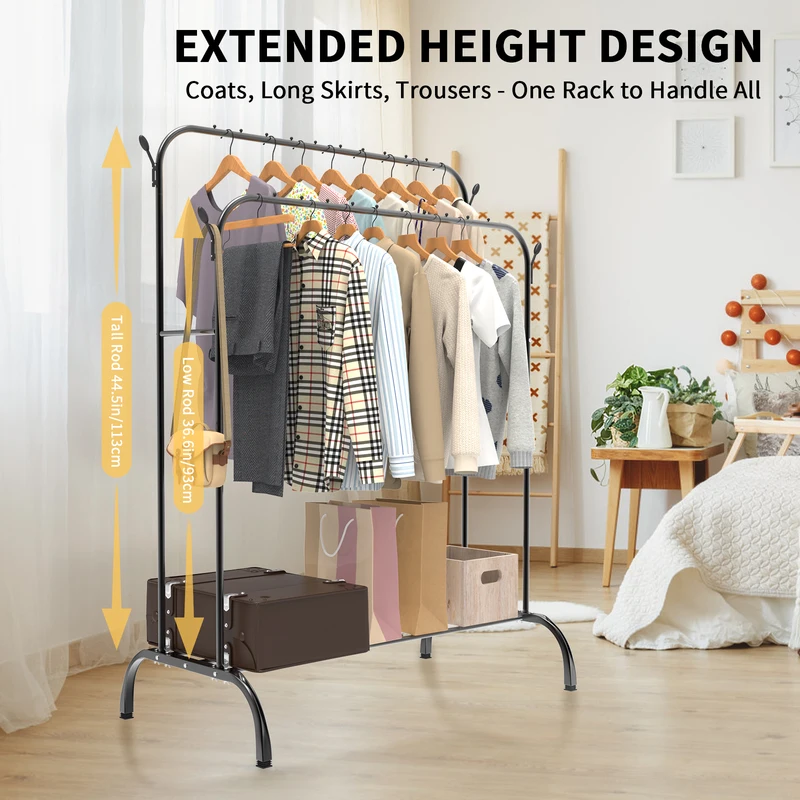
Hanging space is the shelf-less closet's core asset, so multiply it. Shirts, trousers and skirts only need half the closet's height, which means a second rod below the first doubles their capacity instantly. Keep one full-height section for dresses and coats. If the closet is small or already full, a freestanding double-rod rack adds the same capacity next to it, in a bedroom corner, without touching a wall. The Double-Rod Closet Rack assembles without drilling and moves with you, which makes it the standard renter's answer to a wardrobe that ran out of rail.
Zone two: drawers on the floor
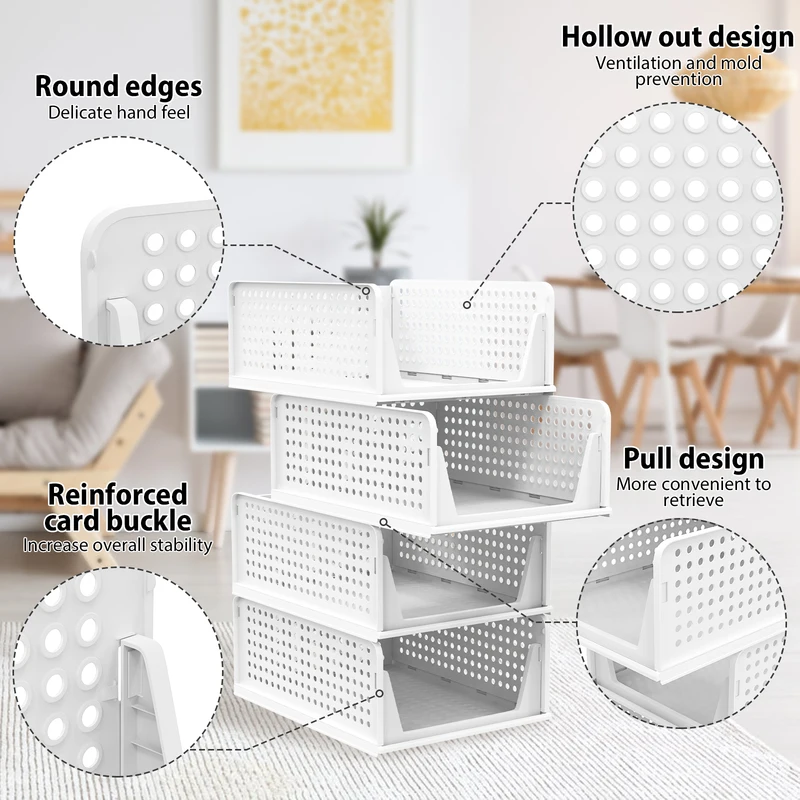
Folded clothes need walls, and the closet floor is where those walls go. A tower of stackable drawers turns the dead space under the short-hung clothes into a proper dresser: t-shirts in one, sportswear in another, jumpers in a third. The Stackable Storage Drawers build exactly as tall as the space under your lowest rod allows, and fold flat when a season empties them. Hold the one-category-per-drawer line. A drawer named 'clothes' becomes a pile with walls; a drawer named 't-shirts' stays a drawer.
Zone three: the top, boxed
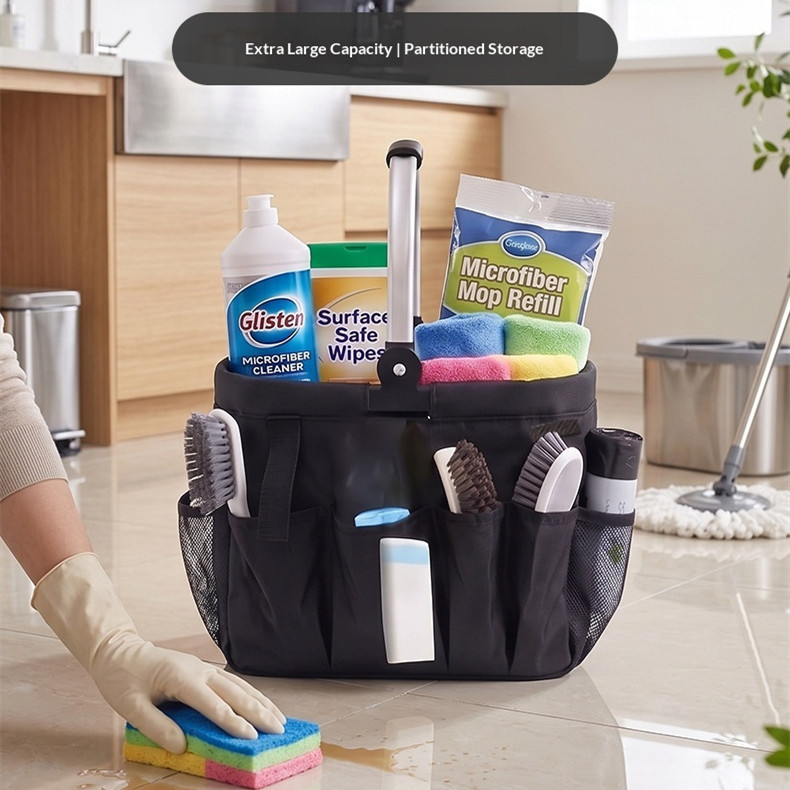
The space above the rod is high, awkward and perfect for exactly one thing: items you need a few times a year. Spare bedding, the other season's clothes, the beach bag. Put them in closed, labelled boxes so dust stays out and the stack stays liftable. Fold-flat boxes with handles, like the Foldable Storage Box with Handle, are made for this rotation: full and stored in winter, folded flat in summer. Label the short side, the one that faces you, and keep the heaviest box lowest in the stack.
The weekly thirty seconds
Systems fail at the margins, so give this one a tiny maintenance loop: when laundry comes back, everything goes into its zone, not onto the closet floor. Once a week, glance at the three zones and return the strays. If a zone keeps overflowing, that zone needs a purge, not more storage. The three-zone closet has a fixed capacity by design, and that constraint is quietly the point: it keeps the wardrobe at the size you actually wear.
FAQ
How do I store folded clothes in a closet with no shelves?
Put a tower of stackable drawers on the closet floor, under the short-hung clothes. Each drawer holds one category, so stacks have walls and stay standing. The tower builds to fit the height you have and folds flat when unused.
Can I add hanging space to a closet without drilling?
Yes. A second rod hung from the existing one doubles capacity for shirts and trousers, and a freestanding double-rod rack does the same beside the closet. Both install without a single hole.
What belongs in the top of the closet?
Only what you touch a few times a year: off-season clothes, spare bedding, occasional bags. Store it in closed, labelled fold-flat boxes with the label facing out, heaviest box at the bottom of the stack.